Beyond the Foodbank
By Neill Patton
This blog is from Community Coordinator, Neil Patton. In it, he shares a little more about the Beyond the Foodbank project and work that the Dunterlie community are doing to tackle food insecurity.
About the project
Beyond the Foodbank (BTF) was a project led by the Food, Farming and Countryside Commission. They describe it as “exploring how funders and community groups can work together to address immediate food needs at the same time as shifting towards sustainable and healthy community based food systems in the longer term”.
What is my (Neill) role?
I was the Community Coordinator in Dunterlie, Barrhead. I supported local volunteers to maintain and develop their food project, Dunterlie Foodshare.
Workshops
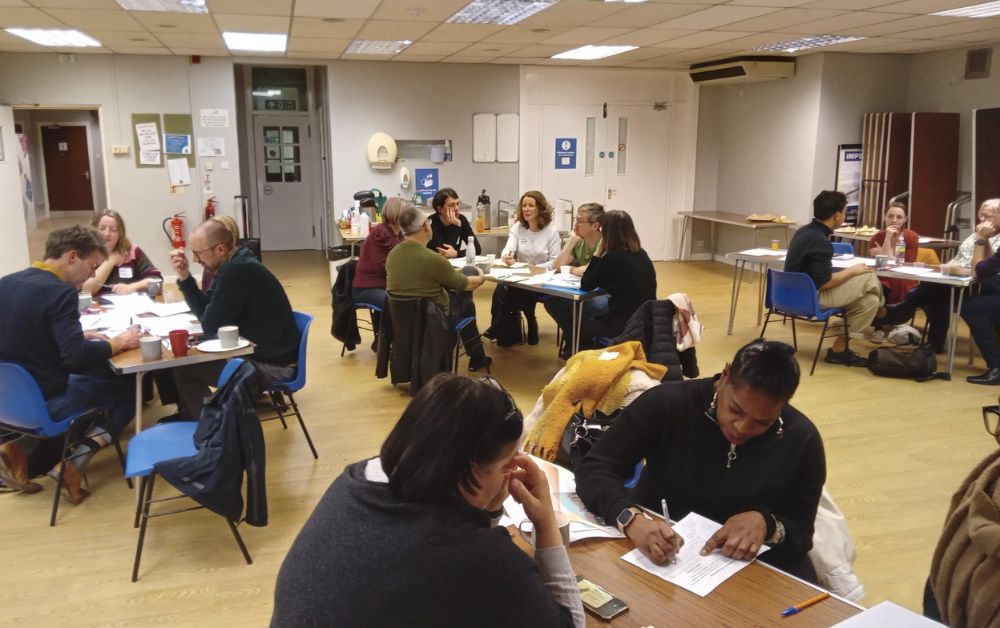
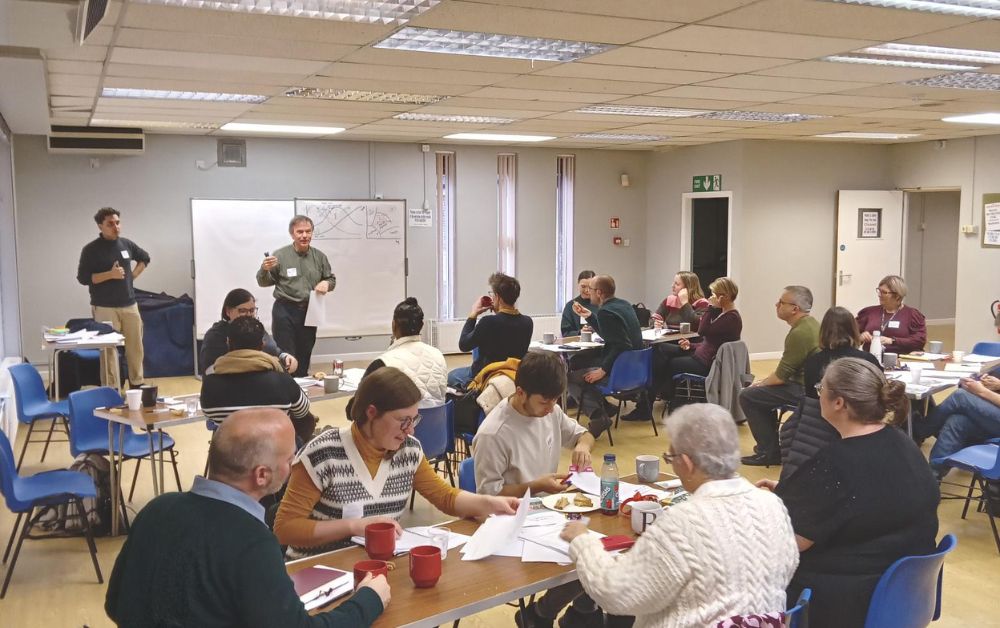
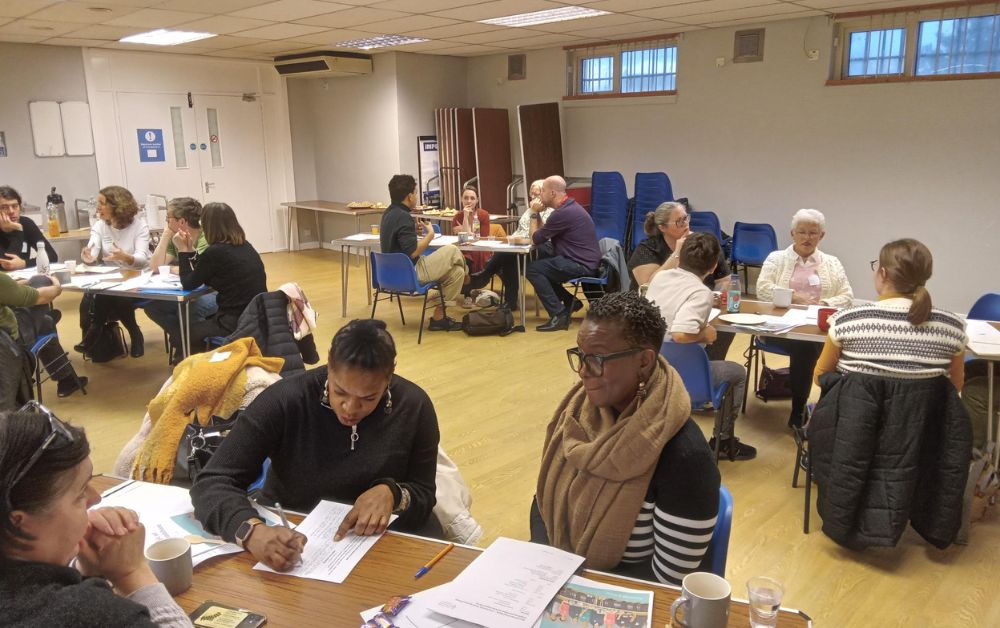
Dunterlie hosted one of a series of five Beyond the Foodbank workshops across the UK.
Hosting this event helped the volunteers, and me, to see that, while Dunterlie Foodshare has its own challenges, it has achieved a lot and offers ‘magic’ and inspiration to others working or volunteering in the area.
We also attended other workshops and some photos of our travels are shared opposite.
About Dunterlie Foodshare and their involvement in Beyond the Foodbank
Participating in the Beyond the Foodbank workshops gave the Dunterlie Foodshare group the opportunity to share their The Magic of Dunterlie Foodshare report. This report was created as part of Scottish Community Development Centre’s Knowledge is Power action research programme. Written by community members, it explores what volunteers and participants get, and the magic they feel, from being part of the Dunterle Foodshare,
“I am so very grateful to Dunterlie Foodshare. It has been lifesaving with a welcoming, friendly and helpful group at a time when I needed the contact from others. A simple gesture from a smile can give you so much on that day”
The Dunterlie Foodshare group were proud that aspects of the work in Dunterlie echoed a description of an ideal community food project in the final BTF report:
‘Imagine…a community hub where a network of organisations and people are working to provide a warm welcoming space for people and families…the line blurs between volunteers, participants, paid workers and funders…the room might have a live musician with people able to receive advice on benefits and financial management and access to the health service’
Learning from other groups
Beyond the Foodbank brought together a number of innovative projects across the UK. It was fantastic to learn first hand from these groups and these provided some insights into how projects addressing food insecurity might develop in the future.
The First Love Foundation
After starting as a food project, First Love Foundation has taken food out of its model completely. It now concentrates instead on addressing the other issues families are facing. Such as ensuring people are maximizing their income by claiming the benefits they are entitled to of the, when £19billion goes unclaimed in UK benefits every year.
This project inspired the volunteers from Dunterlie who also provide benefits advice and other support. This created an immediate connection with Denise and from First Love and they plan to visit the project in London later this year.
My reflections
Learning about projects such as these has been a great source of inspiration and helped me develop a whole new perspective on the role of food in communities.
I am already starting to use these ideas in my new role as a Community Coordinator in Buckhaven. I’m supporting a community food and café project to build and develop their service to build in more holistic support for those using the service.
BTF gave me the time to reflect and think about how community food projects can begin to do more of this and how groups can work together to change a food system that isn’t meeting the needs of their community, build projects and solutions that work them and fight to end the poverty that creates the increasing need for emergency food provision.
And doing this with more confidence and a far broader understanding of the context in which we are operating. Along with a belief that by coming together to fight for healthier local food being easily available and affordable community groups can begin creating new more responsive and human food systems, that can bring people together in a time of increasing social isolation and atomization.