Trauma Informed Grantmaking – The story so far…

By Rowan Anderson
We have a long story to tell at Corra – full of twists, turns and cliffhangers. We have always been interested in stories, whether they come in the form of case studies shared in reports, findings from qualitative research, chats with community groups at project meetings, or listening to people bravely sharing a personal experience.
Stories are the way humans explain what is important to them and the things that shape their everyday experiences – life’s challenges, social and structural issues, as well as people’s hopes and dreams. It’s important then, that when people share their stories with us, their stories are carefully treasured, like a rare and precious first edition.
At the heart of Corra’s strategy is the strong belief that when people find their voice, they unlock the power to make change happen. Throughout our work we listen to, and amplify people’s voices, stories and expertise. However, including the wisdom and advice that comes from lived experience meaningfully, purposefully, and ethically – is a journey… a quest that needs champions and courageous hearts. And this is where our story about becoming more trauma informed begins.
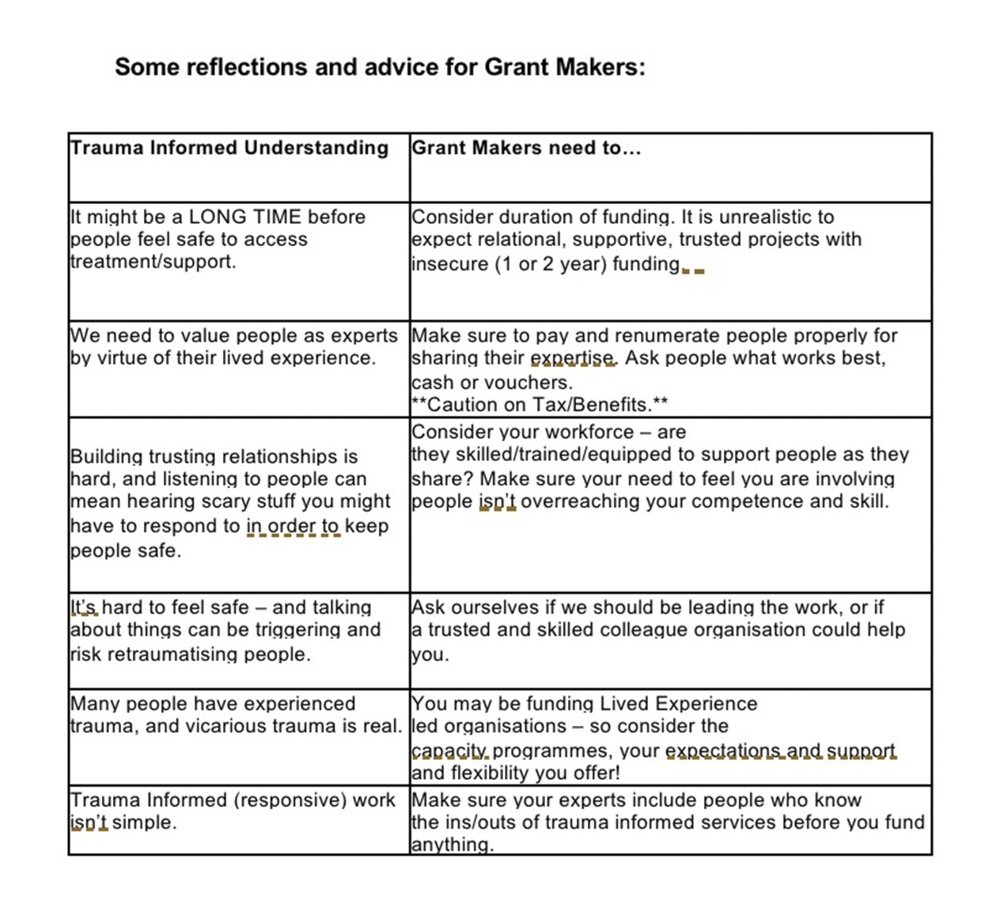
A trauma informed approach to grant making might seem a little abstract, given that grant makers rarely deliver support services. But if we consider how we can bring the theory of being trauma informed into grant making – there is huge potential for grant makers to take a more trauma informed approach.
Trauma Informed People
Corra regularly convenes panels of trusted colleagues with professional or lived and living experience who help us review applications and make decisions. This has meant Corra has had to learn how to be considerate of people’s needs and experiences, and how to make sure that the panels aren’t re-traumatising for people. This is particularly important when people are sharing their own personal stories while reviewing applications that may remind them of their own experiences.
While the approach we take to panels is tailored to individual grant programmes, our main objective is to build relationships with panellists; making sure we have the time and space to get to know them, to build trusting, respectful relationships so that panellists feel they are valued colleagues and respected members of the Corra team. As well as the serious business of reviewing applications and attending formal meetings, this has also meant having ‘wee jollies’ to have lunch or fun activities together, essentially – time to chat outside the panel meetings, and regular meet ups.
We pay panellists for their time – which is vital to putting a tangible, monetary value on the lived/living expertise that people bring. Corra also offers external counselling sessions for staff and our sessional panellists – which is always available for people if they need it.
Where it’s appropriate, we work closely with colleague organisations who see our panellists more frequently than we do – and who might need a little more support to participate (sometimes their care manager/support worker). This way, there is always someone trusted, who has an existing relationship with the panellist and can check in with them after the panel meetings. This is vital, especially when we may not see our panellists in between meetings, especially when working with children and young people.
Trauma Informed Grant Making
Panellists, from either professional or personal experience, can clearly articulate what a trauma informed service is and can therefore comment on how responsive to trauma an application is likely to be. Corra always tries to give constructive feedback to applicants, whether successful or unsuccessful. This means we can share the advice and reflections of our panellists and encourage people to take a more trauma informed approach. This could mean sharing feedback about the types of roles a proposal included, the proposed caseload or the duration of care and support the application intended to provide.
We know that trauma informed work takes time, and a lot of staff resource. So Corra has also tried, where possible, to move away from short -term funding. We know that one or two years of funding is completely at odds with delivering a trauma informed service and leads to challenges with recruitment, wellbeing and retention of staff – which ultimately results in interruptions in the continuity of care received by people (and is therefore, at odds with trauma informed practice).
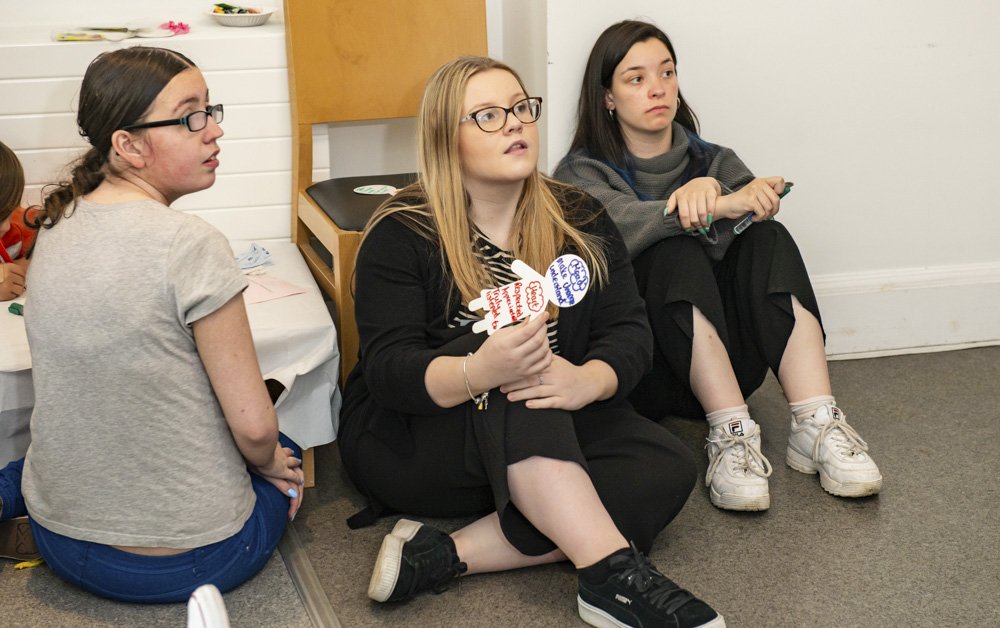
If we’re hosting events, we always try to make sure to create a safe environment. Emotionally, we do this by making sure the host/chair and our staff are skilled and confident in holding space and framing the events as a loving, respectful space. We invite people to bring a trusted worker if they like, and we will always seek advice from the people delivering services about how best to include people. Practically, we create safety by doing things like paying our marvellous friends from a local Recovery group to provide auricular acupuncture and hand massage, so that there is a little de-stress space for people to take time if they need it.
Our next chapter
Corra’s most precious resource is of course, our own staff. We will only be truly trauma informed if our staff are confident and committed to taking an approach that is compassionate and thoughtful. Our plans for the next chapter in our story of becoming more Trauma Informed includes sourcing formal training for our teams. For us, grant making has changed, and being trauma informed and inclusive means we are starting to consider the shape of our staff team, and where perhaps roles with skills in participation and lived experience could feature in our organisation.
Although Trauma Informed work as a grant maker may seem daunting – if you surround yourself with experts by experience, and if you hold everything you do with compassion and emotional safety in mind – you will write a great introduction to your own story.