Ubuntu Women Shelter – Developing a Trauma-Informed Wellbeing Programme
Dania Thomas, Director, Ubuntu Women Shelter
Since 2021, Corra’s Henry Duncan Grants has included ring-fenced funding committed to Black, Asian, and Minority Ethnic-led organisations. This blog is part of a series sharing community stories from Henry Duncan Grants ring-fenced funded projects from 2021 where the funding theme was community-based mental health and wellbeing support.
A huge thank you to Dania Thomas, Director at Ubuntu Women Shelter, kindly took the time to write this blog for us.
Ubuntu Women Shelter – Developing a Trauma-Informed Wellbeing Programme
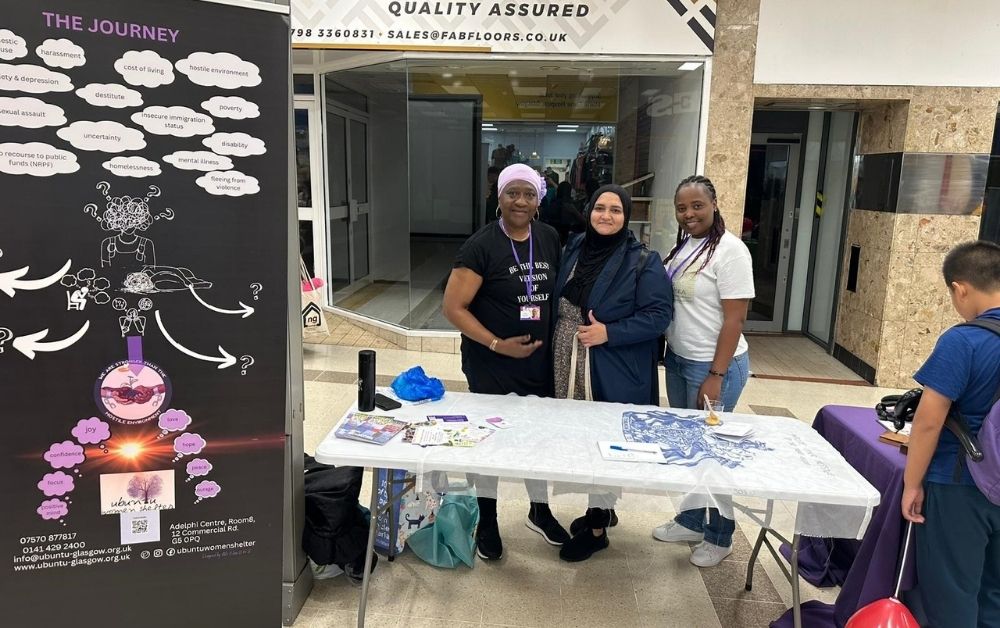
Ubuntu Women Shelter are a Glasgow-based charity. Our main charitable objective is the alleviation of poverty through the provision of short-term emergency accommodation for destitute women with no recourse to public funds. The women we support have without exception either experienced or are experiencing varying forms of gender-based violence, from which they cannot recover, in the main because they are excluded from access to statutory services.
Our services both visibilize and address their multiple and intersecting vulnerabilities, outside the infrastructure of state provision already hobbled by repeated rounds of public sector cuts in the context of an increasingly hostile immigration environment. In this context, our work is both creative, innovative and nourished by our deep and embedded mutually sustaining networks of community support from groups and individuals in Glasgow. We share a wealth of knowledge, tools and expertise on how to negotiate intergenerational poverty, social exclusion, the denial of rights, and to thrive as full human beings.
We provide advice around accessing services such as healthcare, lawyers, grants and food banks. We also offer a trauma-informed wellbeing programme, including one-to-one counselling, therapeutic group spaces and community activities.
Recovery as Reparation Project
The need for specialist and customised services has multiplied exponentially since the spate of new and more draconian laws being introduced around immigration and the context of the hostile environment. This further marginalises and degrades refugees and asylum seekers, including the women with no recourse to public funds who we work alongside.
We sought to invest in and develop the foundations of our trauma-informed wellbeing programme and customised protocols for mental health under the ‘Recovery as Reparation’ Project. These activities include empowerment, ‘stronger than the hostile environment’ training, sewing, planting and hair and makeup activities as therapy. Around 1000 women have been supported through this series.
Becoming Stronger than the Hostile Environment Training
Following consultations with the women in the community, this 6 week training, designed and facilitated by a specialist trainer, was successfully completed with 19 women. This was shaped as a series of workshops that focused on access to health, housing and education, giving the women the tools, skills and knowledge to be able to navigate and engage with the hostile environment.
Trauma Specialist Counselling
In anticipation of the heightened trauma caused by the continuing fear of detention and possible deportation, we have responded by incorporating the services of a trauma specialist counsellor into our destitution support who, in addition to continuing to provide one-to-one counselling, also informs our extended wellbeing programme and most importantly evaluates these services through a specialist trauma lens.
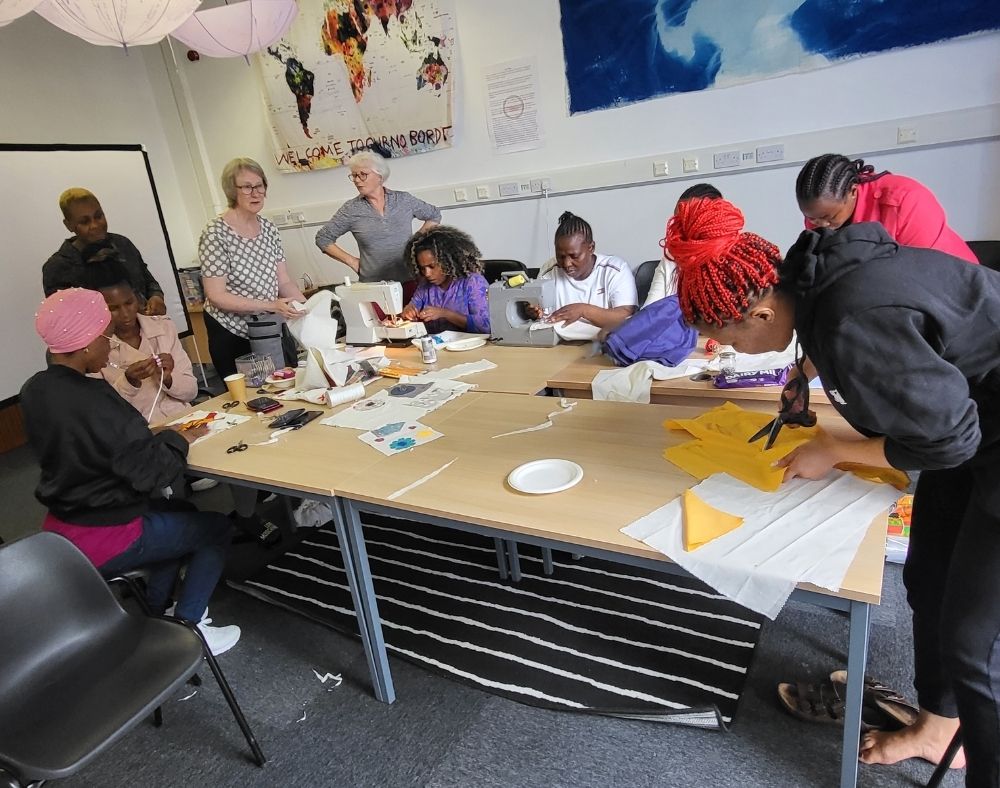
Sewing as Therapy
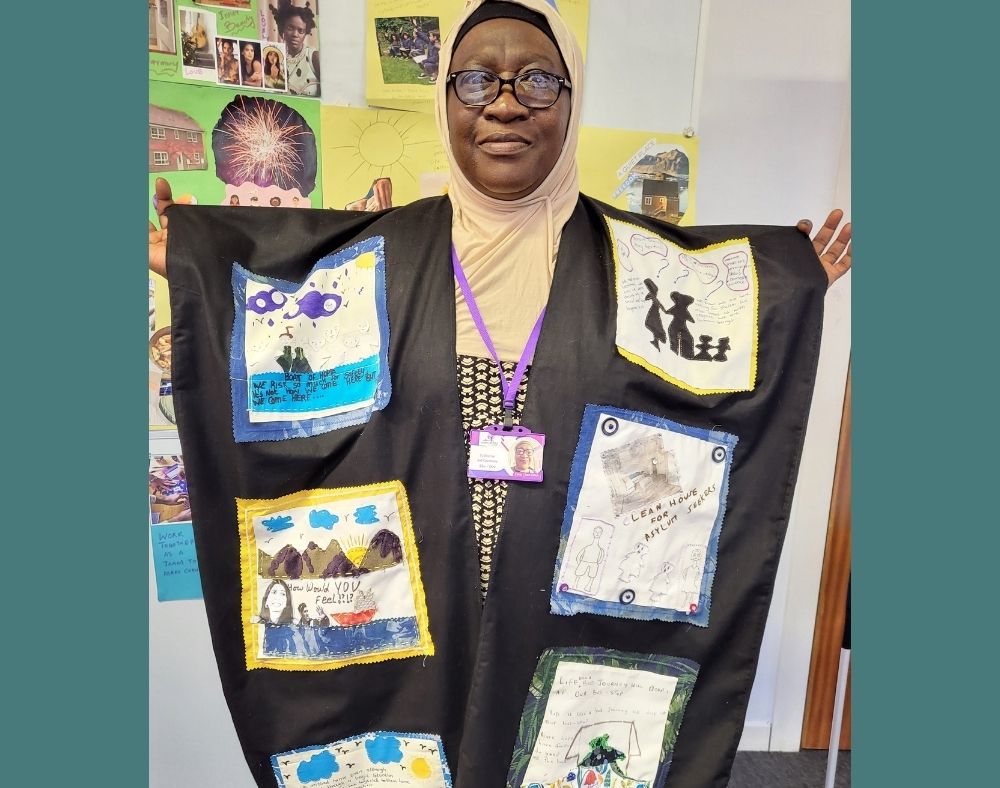
These sessions involved the women in a sewing group where they reflected on their experiences as women with no recourse to public funds. Their work was then sewn into a cape which has become the pride of our office and a prop we use to educate our outreach interventions. The sessions have been a big success and their creativity shined through when a member of the public asked, ‘if the cape was for sale’. The women collectively worked well and enjoyed each other’s company. They said they found parts of themselves that they had forgotten about as well as found a new talent within them.
The grant gave us space to learn and innovate how best to meet the needs of women who are shut out of health and wellbeing services. Based on feedback received, the template developed is dynamic, responsive and well-suited to meet the significant need for these support services.
Challenges:
- The first challenge here is how to communicate the logic of our dynamic and responsive specialist interventions to funders not trained in/ exposed to the intersecting vulnerabilities of the women we support.
- The second related challenge is using our limited resources to simulate the infrastructure and services of the state to meet exponentially growing needs and complex vulnerabilities.
- In addition to our limited and depleting material resources (capital reserves and depreciating infrastructure) the most significant challenges we face lies in the difficulties we have in articulating the nuanced and complex impacts of specialist work on our staff and volunteers.
Find out more about Ubuntu Women Shelter:
https://www.ubuntu-glasgow.org.uk/
https://www.facebook.com/UbuntuWomenShelter
https://www.instagram.com/glasgowubuntuwomensshelter/
More from Henry Duncan Grants ring-fenced funded projects:
Scottish Ethnic Minority Deaf Charity – Healthy Deaf Minds Project