
Sharing Jewish Scotland: Opening the doors to our community through education
Danielle Bett, Project Manager at The Jewish Council of Scotland
This blog is written by Danielle Bett, Project Manager, The Jewish Council of Scotland (formerly SCoJeC). This is part of a series of insights supported firstly through Sky TV funding delivered by Corra, and then from Corra’s own Racial Equity Grants.
Sharing Jewish Scotland, is a project producing a series of educational resources to engage with young people and educators in schools across Scotland; and to make information about Judaism and the Jewish community more accessible. This project enabled us to work in a proactive and creative way, which has been a privilege and a rare opportunity to do something a little differently.
Phase One: Educational Resources
All too often, we find that our community is dealing with antisemitism, handling crises and thus much of our work is reactive – to local, national or even international matters.
Schools often deal with the topic of Jewish people in history lessons, when teaching about the Holocaust, or when the Middle East is on the news. But our community is so much more than that, and we want to be able to talk about what being Jewish in Scotland is like today.
We set out to create a wide variety of materials that include information about Jewish holidays (including some lesser known ones) and other customs, materials that deal with questions about stereotypes, that showcase our diversity – be it different religious denominations, diverse ethnic backgrounds, and the variety of traditions.
“We believe that a key way of countering anti-Jewish hatred is by educating young people in a proactive way that confronts assumptions, misconceptions and shows who we are – and who we are is more than just one thing!”
Crucially, we were able to create Scotland-specific resources which talk about Jewish people, not just in the general sense, but specifically about communities in Scotland.
It’s important to note that antisemitism is not just religious prejudice, but more often than not racial prejudice – a secular Jewish person who does not follow religious traditions is not immune from being on the receiving end of anti-Jewish hatred.
The project was not without challenges, especially as the October 7th attack and subsequent war in the Middle East led to the unprecedented global rise in antisemitism – online, on the streets, in schools and elsewhere. In a practical sense, it meant many of us were preoccupied with fire fighting against prejudice, and truthfully, many of us were overwhelmed by the headlines and rise in incidents. It’s worth noting that many of the incidents of anti-Jewish hatred we have come across since October 7th don’t relate to the Middle East at all.
Nonetheless, we stayed true to our original goal – we have to talk to people and open our doors – be it the doors of our community centre or electronic doors to information.
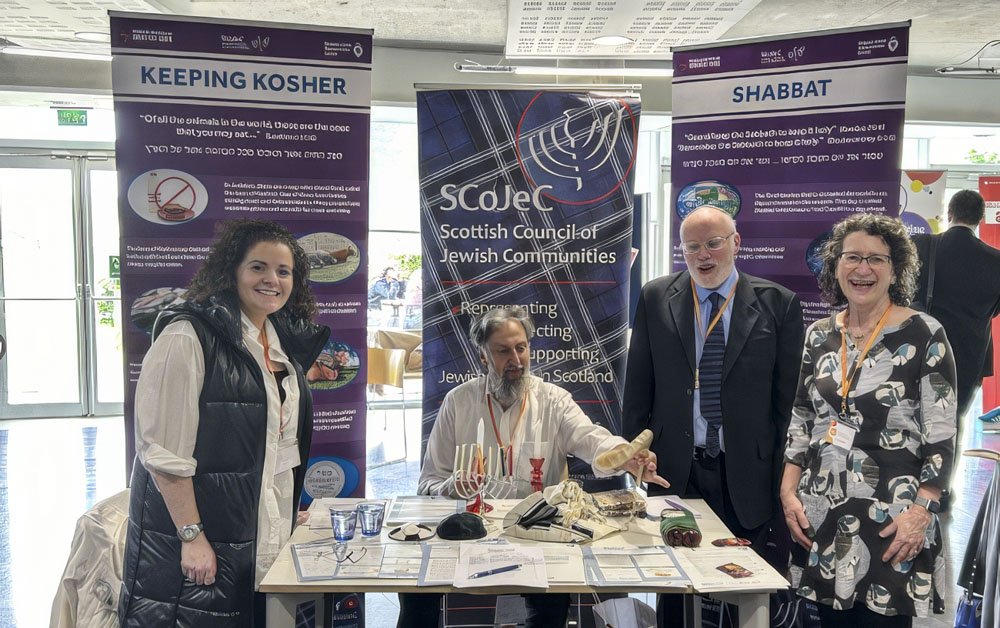
Phase Two: Listening to young people and parents
We’re focusing on speaking to young people and parents to better understand their experiences in school, and beyond. We’re aware that the rise of antisemitism affects young people – in particular with the rise of online hatred and misinformation. We want to make sure that parents are aware of the resources that we’ve created, that we’re here to help, and understand what support is needed, and what can be done.
We’re heartened by the support we’ve had and whilst challenging misconceptions and hatred is an ongoing challenge, we’re hopeful that this project will act as a way of creating positive engagement with schools and young people.
The new online resources developed through the grants can be found here.
The views and opinions expressed in this blog/community story are solely those of the author and do not necessarily reflect the views of Corra Foundation.